
Why Cover Your Head?
Environmental Coherence, Containment and Adaptation

Across many contemporary environments, and around my town, head covering is reappearing — quietly, practically, and without cultural announcement.
It is not confined to religion.
It is not coordinated as fashion.
It is rarely commented on.
Scarves, soft wraps, beanies, lightweight fabrics: adjustable, removable, functional. The pattern suggests response rather than symbolism.
When a behaviour emerges across individuals who are not communicating with one another, the most reliable explanation is physiological.

The head is not neutral territory
The head carries disproportionate biological cost and exposure.
The brain accounts for approximately 20% of total metabolic demand
The scalp is a major site of heat exchange
Vision, hearing, balance, and smell concentrate sensory input
The upper cervical region is a key autonomic interface
Unbuffered exposure of the head increases sensory throughput, thermal variability, postural vigilance, and sympathetic activation.
Covering the head reduces all of these simultaneously.
This does not require belief or intention.
It is mechanical regulation.
Parasympathetic predominance is not just “relaxation”
Parasympathetic predominance is often misdescribed as calm or rest. Physiologically, it refers to baseline regulation favouring maintenance over vigilance.
It is associated with:
Lower resting respiratory rate
Reduced sensory scanning
Stable cerebral perfusion
Reduced tonic bracing in jaw, neck, and upper thorax
This state is supported when environmental input is moderated.
The head is a primary entry point for that input. Reducing sensory and thermal load at the head decreases afferent demand and allows regulation to shift without effort.
In this context, head covering is not psychological coping.
It is energy economics.
What can be stated with confidence
Discussions of head covering often collapse origin, function, and power into a single narrative. These elements need to be separated.
The following can be stated with confidence:
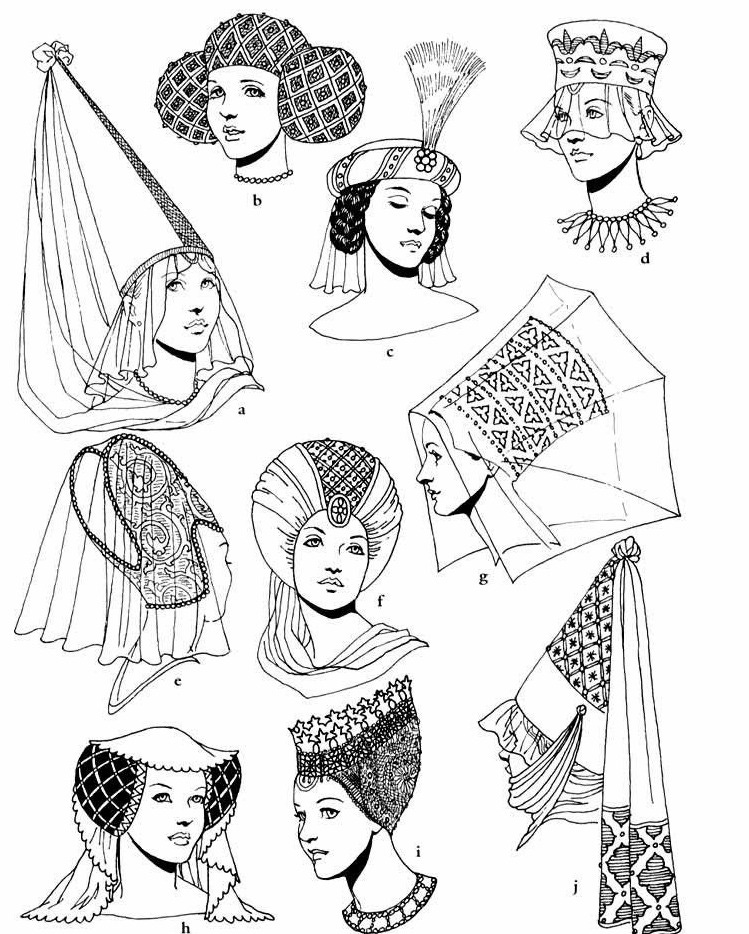
Women’s head covering predates many formal religious codifications.
Across cultures, it appears long before doctrine or law.The earliest and most consistent forms are practical rather than symbolic.
Materials are breathable, adjustable, and compatible with work and care.Female adaptive practices are frequently institutionalised after the fact.
Behaviours that emerge from environmental necessity are later moralised or formalised.Once institutionalised, original context is often erased.
Function is replaced by symbolism; regulation is reframed as obedience.Coercive enforcement is a later distortion, not the source.
Where head covering is imposed by law — as in contemporary Iran — it functions as social control. This represents appropriation of a pre-existing practice, not its origin.
Function precedes power.
Control follows when function is forgotten.
Modesty does not adequately explain the behaviour
The modesty explanation fails on several grounds.
It is selectively applied, inconsistently across gender, class, and context. It persists indoors, during work, and during solitary activity. It appears most reliably among women engaged in labour and caregiving rather than in ceremonial or moralised settings.
Modesty is a narrative applied after the fact.
The behaviour itself shows the characteristics of equipment.
From a physiological standpoint, head covering makes sense without invoking morality.

Environmental coherence and its absence
Many Indigenous groups who remained strongly adapted to place have never worn head coverings — and still do not.
This is not an absence of protection.
It reflects environmental coherence.
Adaption to environment might mean that hair alone is sufficient.
Head covering appears most consistently where coherence breaks down: urbanisation, crowding, displacement, climate volatility, surveillance, and chronic sensory load.
The mid-20th-century exception
The rapid abandonment of head covering in the mid-20th century coincided with artificial heating and cooling, electrification, indoor work, and a temporarily stable food supply.
Environmental buffering allowed greater exposure without immediate cost.
That buffering is now eroding.
A simple principle
As physiological adaptation to environment improves, the need for compensatory protection diminishes.
Where adaptation is undermined, containment increases.
Head covering sits on this gradient.
An open question
Before assigning cultural or political meaning, a simpler question remains:
What is the nervous system responding to — and why now?