

The Guru Problem
Elephants in the room.

Why are so many yoga teachers men, when so few yoga practitioners are?
Look around any class and the imbalance is obvious. Women fill the mats. Yet men still dominate the teacher’s seat, the guru’s chair, the published books.
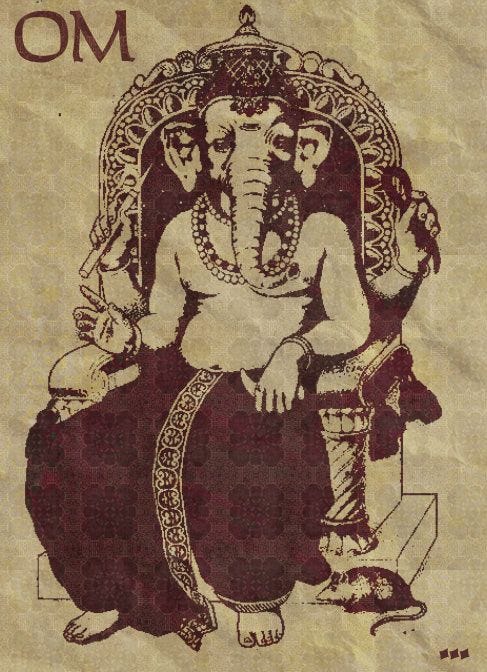
Some of it is Orientalism — the West’s hunger for a mystical “East” embodied in the male guru figure. Some of it is patriarchy — our inherited tendency to glorify men, even when women have done the real work of keeping practice alive.
But it’s also about power. The guru role often attracts men who withhold information, drop pearls of wisdom for others to catch, and feed off the reverence directed at them. And history has shown where that can lead: sexual exploitation, financial abuse, manipulative hierarchies.
We forget that gurus are men first — men with desires, egos, and flaws. Men who can be seduced by money, sex, or power. Yet somehow the tradition trains us to look past that, to imagine their authority as pure.
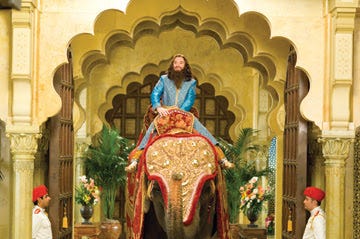
Even Hollywood saw the absurdity. The Love Guru mocked the same pedestal we keep putting men on. It was funny on screen — but in real life, the consequences aren’t funny at all.
Reverence or Credentials?
I do believe in reverence. When someone has truly taught us, when we’ve really learned something from them, respect matters. But that kind of reverence belongs to true seekers — to people who have actually absorbed and tested what they were taught — not to those who only feign respect as a shortcut to prestige.
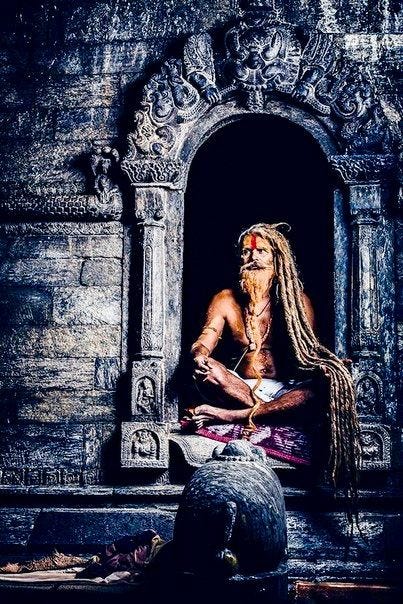
An old woman said something to me recently that echoed what I’ve long thought. She never liked the pictures of old gurus hung around yoga classrooms — half-naked men in their “yoga nappies,” striking poses meant to be admired. “Where are the women here?” she asked. Why are we still surrounded by these images of male bodies to admire, as if form is proof of truth?
Too often, those pictures become a badge. A credential. Proof, not of learning but of proximity — “I was near this famous name, therefore I inherit their authority.” Reverence turns hollow when it’s used as an emblem instead of lived experience.
The Deadbeat Yogi
Did he just step away? Was the cave another escape?
Have we mistaken absence for wisdom and praised neglect as enlightenment?
Is this just another case of an absent father with the best excuse in the world — the holier-than-thou excuse?
Working Bodies
And here’s another truth. It’s easier to look flexible and serene if the day is spent sitting at the front of the room.
I know what it’s like to carry a body that works. In my job I’m on my feet, lifting, moving, responding. That constant engagement creates fatigue and tightness.
So when a yoga teacher points at a working body and calls it “stiff,” there’s an unfair advantage at play. Tightness comes with activity, with labor, with responsibility. Real work shapes real bodies.
That’s why I do yoga — not to be good at yoga, but to keep me fit for work. Real yoga has to honor that. It isn’t about escaping into caves or pedestals.
It’s about down-regulating the autonomic breath rate in the middle of effort. About building stress-tolerance rather than avoiding stress. About maintaining healthy muscle loading, stretching what tightens with real labor. About teaching the body how to settle steadily and gradually, while the work of life goes on.
Where Are the Women?
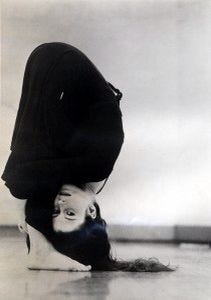
And finally: where are the women? Why aren’t women usually putting other women up?
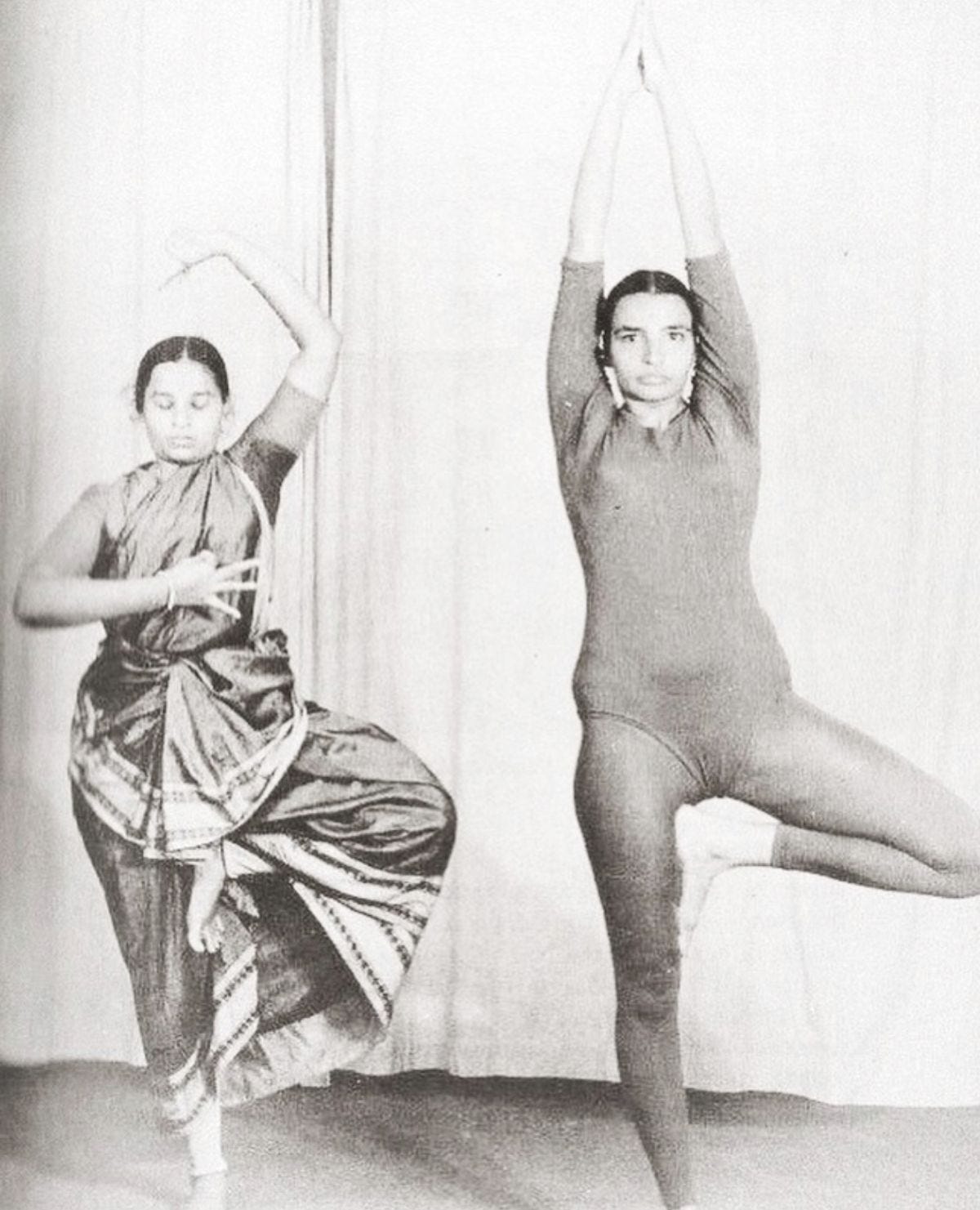
The walls of yoga studios are still lined with portraits of men — old gurus in loincloths, men whose bodies and names became the emblems of practice. Meanwhile, the women who carried, preserved, and embodied these practices remain invisible.
Where is the The Indus Valley Seal? The recognition that yoga may have been born from women’s bodies, women’s insight, women’s necessity? We don’t see it because no one put it there. And maybe we don’t see it because women ourselves have not put us there.
That absence is the real elephant in the room. It isn’t just that men have taken the seats of authority. It’s that we haven’t claimed our own.
I suppose I can’t be surprised — the iron age was an age of domination. Domination of the land, of other people and animals and of men over women… we are only just crawling out of that long period now and beginning to recognise ourselves.
About the Author:
Catherine Broué works with the body as a whole system, focusing on breath and the nervous system. After two decades in ICU and dialysis, she turned to the deeper question of real health, guided by mentors and the insights of Christian Bohr and Konstantin Buteyko. Her work centres on the body’s true regulators — breath and the central nervous system — and the return to parasympathetic dominance.