

Śavāsana शवासन
The Practice of Being Dead

Death as physiology: when activity ends, integration begins.
In Sanskrit, Śava means corpse.
Śavāsana isn’t “relaxation at the end”. It’s taking up the pose of a corpse or the practice of death — rehearsal for the final release that our living body will face.
In Western culture we hide from death, deny it, medicalise it, outsource it.
On the mat we can bring it closer, learn its texture, and discover that it’s simply another phase of physiology: the nervous system letting go of control.
Time to practice being dead.
It’s a way of saying: stop performing, stop improving, stop intervening.
Let the breath and the chemistry finish what they began.
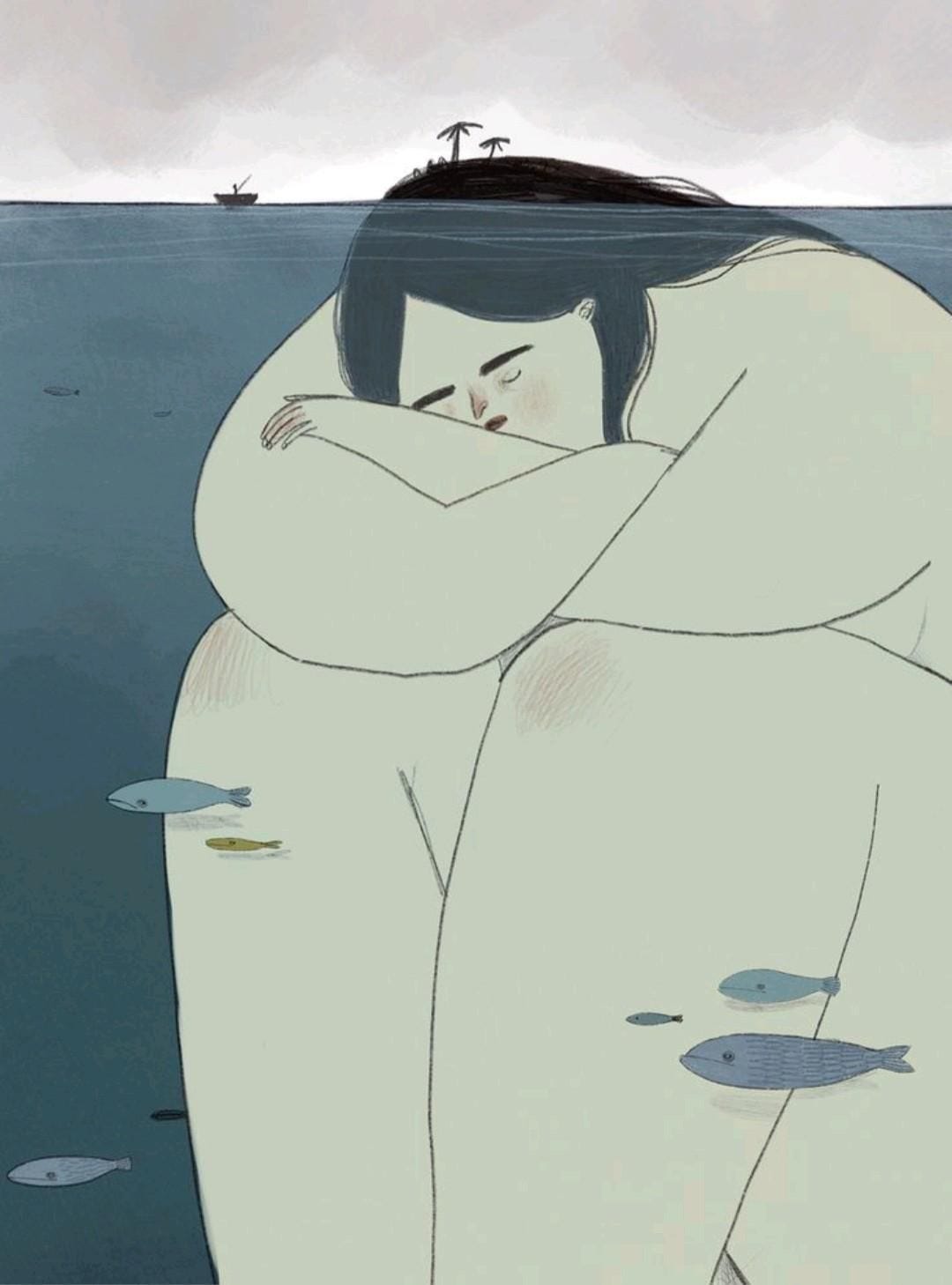
After practice the body is warm, slightly acid — the increased metabilic rate of activity has left us with alive with the residue of movement.
This is the moment to stop.
The timing matters: Śavāsana works because chemistry and consciousness meet right here—when metabolism is high enough to open the gates of integration but not so high that exhaustion has already set in.
Fully release
As you lie down, really release — drop yourself into the mat. Release three times.
Each time, imagine gravity claiming a little more of you.
This is not collapse; it’s deliberate release.
The limbs become heavier, the skin cooler, the breath quieter.
Now imagine three diaphragms: at the throat, the chest and the pelvic floor. Three little gingham curtains at three open windows.
The morning sea breeze comes and goes; the curtains flutters just a little, out towards the sea and with the tide flows your in breath, when you breathe out, in the curtain flutters back towards you.
You start to realise that the breath is connected to the tide and the tide is really controlling the breath.
The tide becomes more gentle., with every minute, the flutter of the curtain lessens until it’s almost imperceptible.
Breathing shrinks to a thread—soft, nasal, quiet—small enough that the body finally believes it is safe.
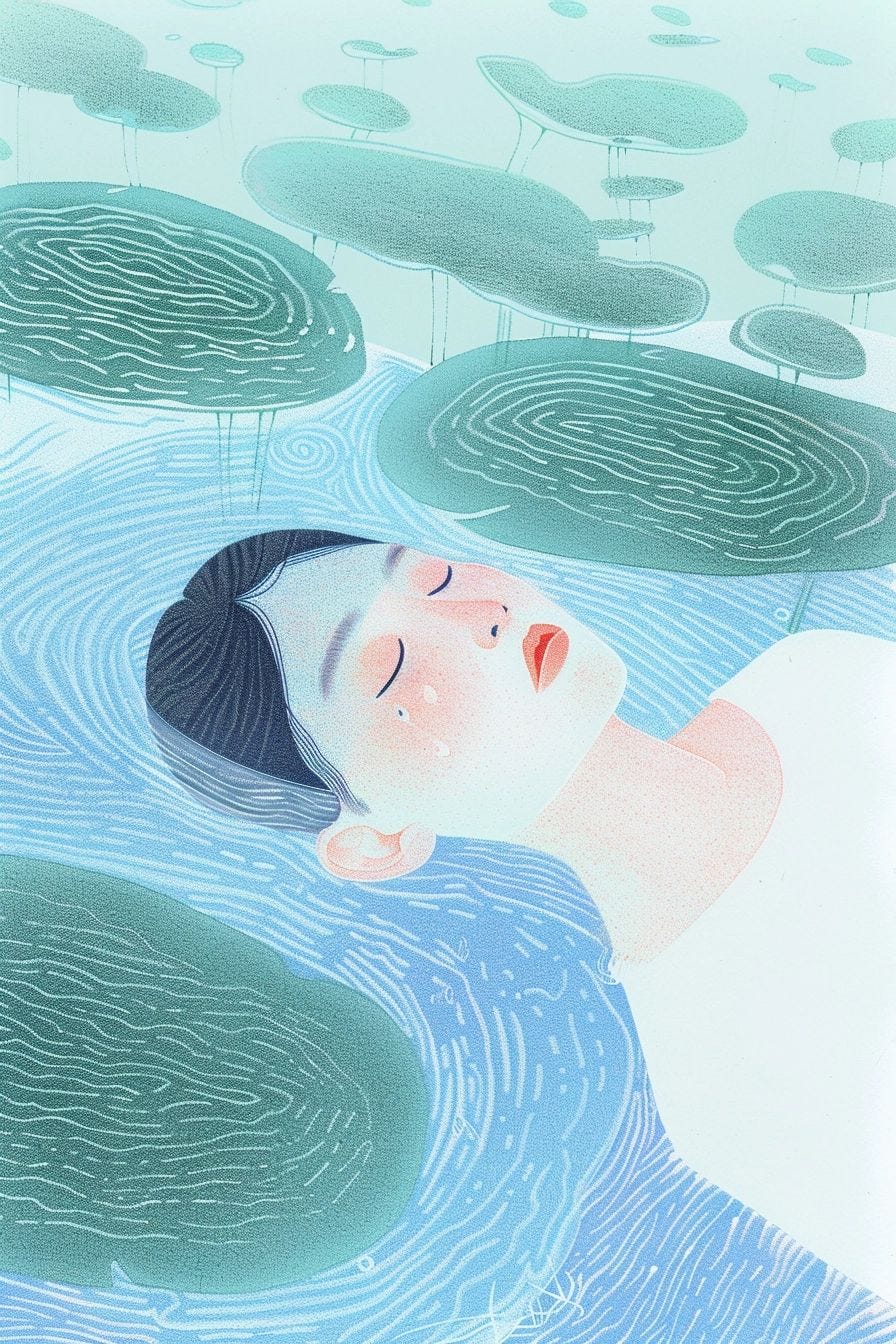
Death is the absence of activity
When you arrive in stillness, remember that Śavāsana is an absence of activity.
Every pulse of the nervous system, every muscle fibre, every flicker of thought is work—each consumes oxygen.
To be truly still is to suspend that expenditure.
This is the integrative phase of yoga: the body has done its labour, generated heat, changed its chemistry.
Now it must stop producing and start absorbing.
The breath becomes almost imperceptible so that oxygen can move where it’s needed and the deeper healing can begin.
We are not ending the practice; we are giving the practice a chance to complete itself.
The Physiology of Integration
During movement, muscles generate acid and CO₂.
That mild acidity is not a problem; it is the signal that opens the Bohr effect, prompting oxygen to hop off the blood carrier — hemoglobin — and enter the tissues.
When you stop moving but stay aware, you give the system the stillness it needs to complete this transfer.
CO₂ also relaxes the smooth muscle walls of the blood vessels so as, capillaries dilate, oxygen diffuses, the pH begins to rebalance, and the chemistry of recovery unfolds.
The Spinal Arc
Every pose and transition of practice has been lighting up reflex arcs—automatic loops of communication between a muscle and the spinal cord.
When a muscle is stretched, sensory fibres within it (the muscle spindles) send a signal to the spinal cord, which instantly sends a message back through motor neurons, telling the muscle to contract.
These loops maintain tone, coordination, and posture without needing the brain’s involvement.
As oxygenation deepens and the parasympathetic system takes over, those arcs begin to quiet.
The muscles stop reporting; the spinal cord stops replying.
Śavāsana turns them off one by one, the way a caretaker moves through a great building at night, slowly switching off the lights.
If one flickers back on, you don’t rush—you simply return and turn it off again.
When the lights are finally out, what remains is a building at rest:
oxygen integrated, reflexes reset, mind still enough to witness the silence of its own circuitry.
At the level of physiology, this quieting likely reflects improved perfusion and oxygen delivery to spinal interneurons and synapses, where adequate oxygen is essential for full repolarisation and the normal inhibition of reflex firing.
Habituated Holding
Through years of repetition, reflex arcs can become habituated, holding the body in familiar configurations—once protective, now restrictive.
They continue to fire even when the original stressor is long gone, sustaining small islands of contraction that no longer serve movement or safety.
Śavāsana provides the conditions for these patterns to be recognised and released.
We may even have the physiological capacity to deactivate these self-sustaining spinal loops, allowing the muscle–spinal circuitry to fall silent and reset its baseline tone.
Sometimes these are the areas that seem to “light up” again—the body’s old command circuits briefly testing their ground.
When that happens, we return as the caretaker once more, bringing breath and awareness to the region until it quiets.
Reaching the Unreachable
There may still be regions where blood flow and breath do not yet reach—zones of incomplete communication within the body’s network.
Here, oxygenation is limited, and the neural synapses within the arc cannot fully repolarise; the circuit keeps firing on partial information, unable to stand down.
In these places, the work is not to force release but to direct the breath as inquiry—to let respiration and attention enter gently, restoring circulation, re-establishing feedback, and allowing the arc to quiet from within.
Closing
This is where practice meets physiology.
What yoga teachers have long sensed as release or softening may, in part, be the nervous system reorganising itself—reflex arcs completing their loops, oxygen returning to synapses, communication restored through the length of the spine.
To speak of it in these terms is not to reduce yoga to science, but to recognise that the same intelligence we call prāṇa is also the language of the nervous system learning to rest.
In that silence, death loses its sting—it becomes the body’s most natural movement of all: the final exhale.
Catherine Broué works with the body as a whole system, focusing on breath and the nervous system. After two decades in ICU and dialysis, she turned to the deeper question of real health, guided by mentors and the insights of Christian Bohr and Konstantin Buteyko. Her work centres on the body’s true regulators — breath and the central nervous system — and the return to parasympathetic dominance.