

Histamine Says NO
Mast cells - Your Body's Border Control

If you’ve ever watched Little Britain, you’ll remember Carol Beer, the receptionist whose answer to everything was a flat: “Computer says no.” Our bodies have their own Carol Beer. Her name is histamine.

When mast cells release histamine, the answer is always no. Capillaries loosen, fluid leaks out, tissues swell. It’s our built-in refusal: you’re not coming in. The swelling and congestion we call an allergy is only one face of the response — the same mechanism is triggered in infection, in injury, in almost any threat.
It’s really the body’s armour — when the hull is breached — as any starship captain would say — the sheilds go up. Thickening the barrier between the bloodstream and the outside world is our first line of defence.
Mast Cells on the Perimeter
Mast cells don’t sit deep inside the body. They guard the borders: the skin, the airways, the gut, the bladder, the vagina. They wait at the perimeters, where the outside world tries to get in.
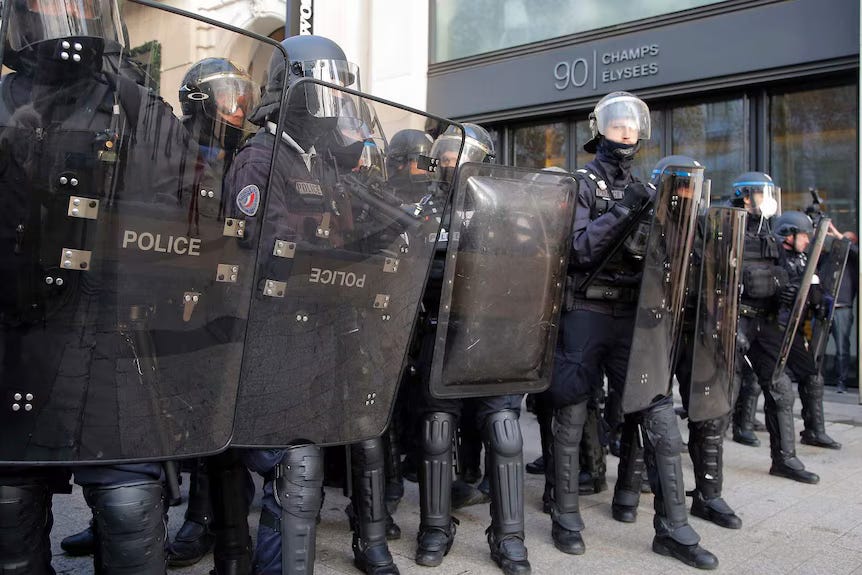
When they sense injury, infection, or invasion, they release histamine. That one signal changes the behaviour of tiny blood vessels. Capillaries that normally hold blood tightly now leak fluid out into the tissue. The first defence is always the same: swell the barrier. Like coppers locking shields, histamine thickens the wall between the bloodstream and the invader.
Why Mucous Membranes Are Reactive
This is why mucous membranes are so vascular. They are designed to defend. The nose, lungs, gut, bladder, and vagina are packed with capillaries so they can respond instantly. First, water leaks out to form a shield. Then the soldiers arrive — white cells and inflammatory agents flooding in through the same vascular gates.
It looks messy: snot, mucus, swelling. But it’s strategy. The moat fills first, the fighters move in behind.
The Airways: Our Weak Point
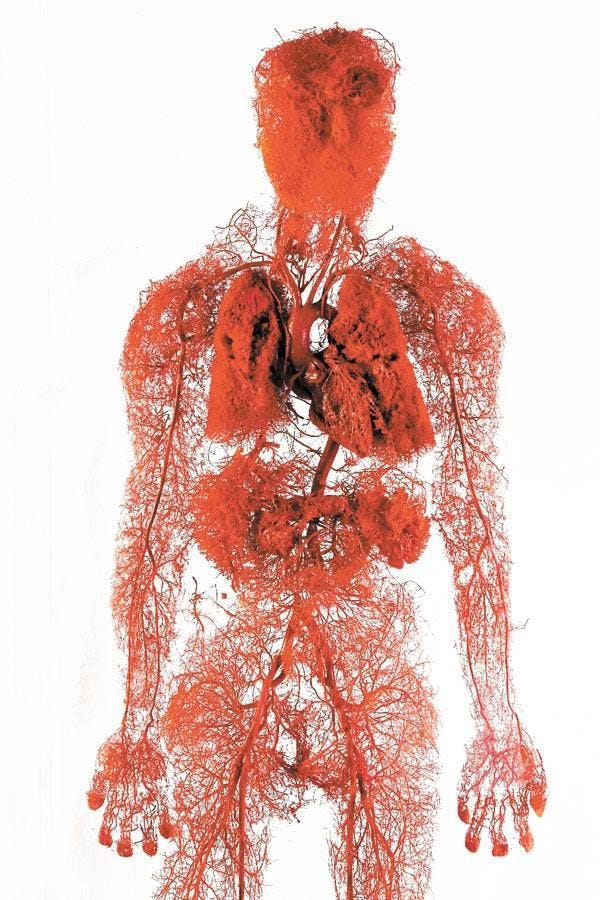
If you’ve ever looked the body’s blood vessels laid bare, the pattern is almost orderly —the torso looks patterned, the limbs look mapped. But the head breaks that pattern. The airway is wrapped in a dense tangle, a vascular thicket.
Not all those vessels serve the brain. They’re guarding the airway.
This is our weak point, and the body knows it. Every childhood disease from measles to whooping cough, every respiratory invader from flu to COVID — they all try to enter here. That forest of vessels exists so the body can mount an instant histamine defence. Swelling here is not a mistake. It is our front-line refusal.
The Modern Twist: Over-Breathing
But modern physiology adds another layer. We are all breathing too fast. Over-breathing signals stress to the nervous system, which in turn informs the immune system: be on guard.
Locked in fight-flight mode, the immune system develops antibodies to proteins that only look strange — pollens, dust, foods. Harmless things are misread as threats. The cycle spirals:
Over-breathing → histamine release → swollen airways.
Swollen airways → harder breathing → more stress signals.
Stress signals → immune misfires → allergy
.
When Swelling Stops Helping
Swelling is protective, but it isn’t meant to last forever. If it continues unchecked, it can choke the very tissues it was supposed to defend. Blood flow slows, oxygen can’t reach the cells, healing is delayed.
That’s why the basics — rest, elevation, ice — matter. Sometimes a low-dose topical treatment can help too. Something acidic on a bite, like vinegar, salicylic acid, or tiger balm, can damp down histamine in the skin and keep swelling under control. (Not for mucous membranes, of course — just the outer skin.)
Antihistamines do the same thing from the inside. Treating your allergies is important. Chronic swelling and congestion aren’t just uncomfortable — they’re counterproductive. They block oxygen, slow repair, and trap waste products.
This is where phagocytes — the body’s cleanup crew — should be at work, tidying away the by-products of red cell breakdown and tissue damage. If swelling lingers, their access is blocked, and the bruise, the bite, or the inflamed tissue sits in limbo, unable to fully heal.
In the short term, histamine is armour. In the long term, if you never take the armour off, it becomes a cage.
Histamine Says No
So the next time your nose swells or your eyes water, remember: histamine isn’t being awkward, it’s being protective. It’s the Carol Beer of your immune system — flat, uncompromising, relentless. Computer says no. Histamine says no. And for most of human history, that simple “no” has kept invaders at bay.
About the Author:
Catherine Broué works with the body as a whole system, focusing on breath and the nervous system. After two decades in ICU and dialysis, she turned to the deeper question of real health, guided by mentors and the insights of Christian Bohr and Konstantin Buteyko. Her work centres on the body’s true regulators — breath and the central nervous system — and the return to parasympathetic dominance.