

Gradual
For breathwork: real change must take time

“यथा सिंहः गजः व्याघ्रः च क्रमेण वशीकृताः भवन्ति तथैव प्राणवायुः क्रमेण नियन्त्रितः भवति अन्यथा अभ्यासकारं नाशयति”
Hatha Yoga Pradipika
Just as the lion, elephant, and tiger are tamed gradually, so the vital air is controlled gradually; otherwise, it destroys the practitioner.
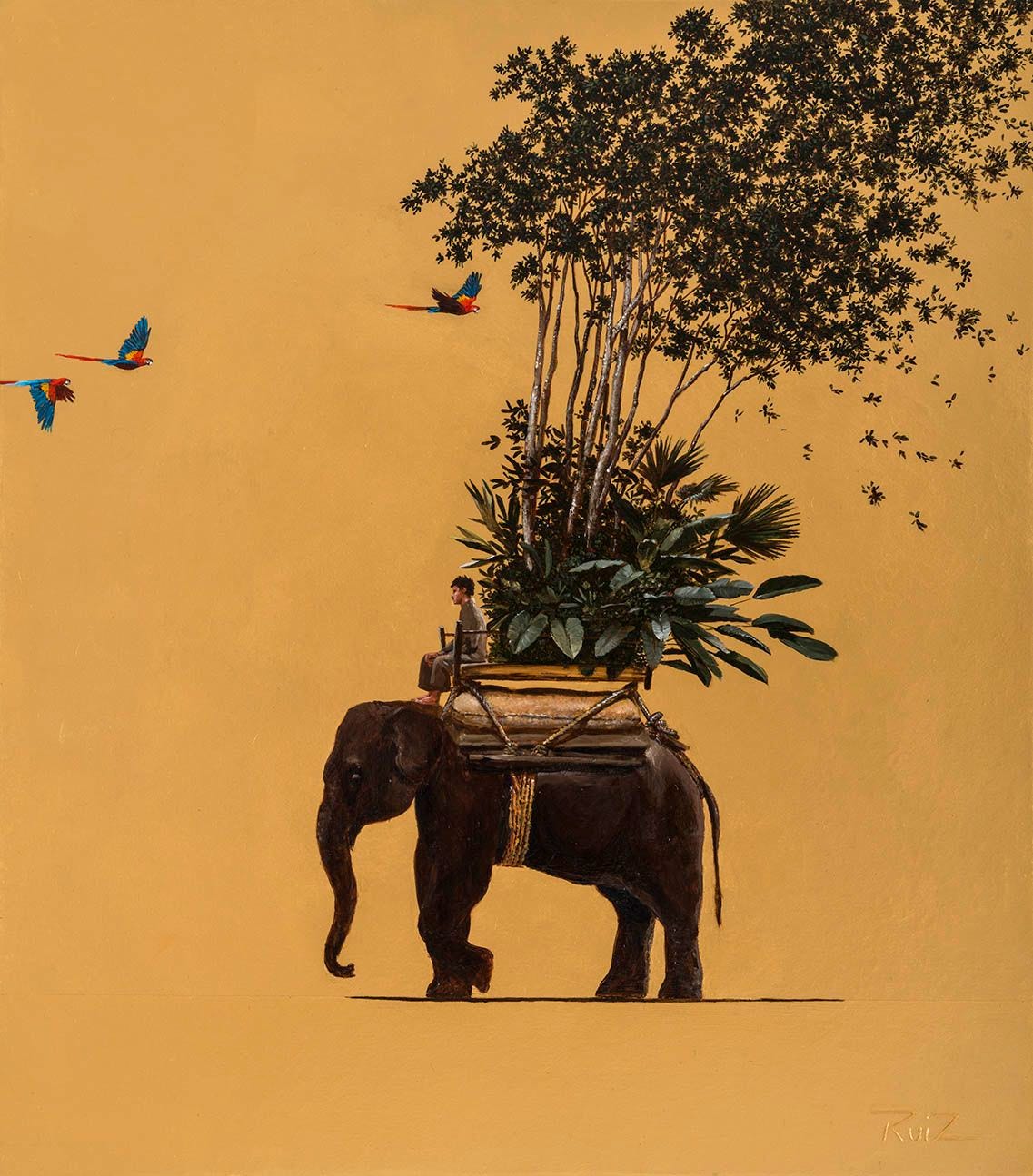
Everyone wants quick results. That’s the modern mindset: push hard, master it now, prove it this month.
The breath doesn’t work like that.
The Hatha Yoga Pradipika makes it absolutely clear, every word is deliberate. Gradually is as important as any other word in that verse. It is the safeguard. Without gradualness, the practice will turn against the practitioner. The warning is implicit: train a lion, tiger or elephant too hard or too fast, and it will kill the tamer outright.
Breath speaks directly to the central nervous system, they are intrinsically connected. Straining disrupts that communication. Whether because a teacher encourages competitive breath-holds or simply because of a cultural reflex to push and prove, the result is the same: the nervous system is agitated instead of calmed.
Competitive breathwork unsettles what is meant to be settled. When the nervous system is allowed to soften, the benefit is real. When it is forced, stress remains.
Everyday Triggers
Practice doesn’t have to start with a “breath practitioner.” It’s as simple as closing the mouth. Dedication to nostril discipline.
Nose breathing reveals itself in small ways. When it’s absent, there are signs: a dribbly pillow, a dry mouth in the morning, restless sleep. These are the red flags of mouth breathing at night.
And then there are the triggers. Alcohol is a big one — it swells the tissues and steals the nose. Grief, anger, stress, excitement — even something as ordinary as running late — can flip the breath back into the mouth. Realise this. Close your mouth. And those emotions will no longer have the power to destroy you.
Don’t confuse performance on the mat or in a workshop with real steadiness. It isn’t about proving anything. The measure is whether the breath holds steady when life heats up.
The Breathing Bag
The more the breath is regulated through the nose, the more carbon dioxide the body learns to tolerate. The outer smooth muscle wall of the airway muscles soften and widen, the diaphragm softens, the whole system expands.
There’s no need to “train the diaphragm” directly. With nostril breathing, the diaphragm releases and adapts on its own.
Your total breathing bag gets bigger — lengthening and slowing the breath.
The cycle is simple:
nose breathing → CO₂ retention → softer diaphragm → bigger breathing bag → slower, longer breaths → more CO₂ retention.
Each loop deepens the steadiness.
CO2 is our natural muscle relaxant and it softens all muscles, skeletal and smooth.
Why Gradual Matters
Competitive exhalations, stopwatch challenges, or the push to master it all in a year miss the point. Abrupt forcing destabilizes physiology. Gradual practice recalibrates it.
The body learns slowly. It takes time for tissues to soften, for chemoreceptors to reset, for the nervous system to accept a new normal. That’s why breath must be approached with patience.
Because breath isn’t an accessory. It defines life itself. It has shaped the body since before birth — determining blood flow, guiding organ growth, influencing tissue development. To work with the breath is to work with the deepest architecture of life.
In the end, it isn’t about tricks or performances. It’s about whether, under pressure, the slow breath predominates.
And that only comes gradually. It gets trained into the body memory.
Turning Out the Lights
Sometimes the easiest way to understand relaxation is through metaphor.
When guiding people into slower breath, I often describe it like being a caretaker in a large house. You walk from room to room, gently turning out the lights. One by one, the house grows quiet, dark, and still.
The same happens in the body. Starting at the feet and moving upward, tension is released, lights are switched off. The aim — especially through the torso and chest — is an absence of activity, an absence of pressure. Breath becomes light, unobstructed, almost invisible.

About the Author:
Catherine Broué works with the body as a whole system, focusing on breath and the nervous system. After two decades in ICU and dialysis, she turned to the deeper question of real health, guided by mentors and the insights of Christian Bohr and Konstantin Buteyko. Her work centres on the body’s true regulators — breath and the central nervous system — and the return to parasympathetic dominance.