

Free the Left Psoas
It's the conduit of manifestation.

Much is said about the psoas — why it locks, why it jams the paraspinals and, why it makes one leg feel longer than the other.
But the pain in your hip is not about mystical trauma from your lineage or worse — a frightful technical label from mainstream medicine, claiming your rusty old hip has cracked an axle.
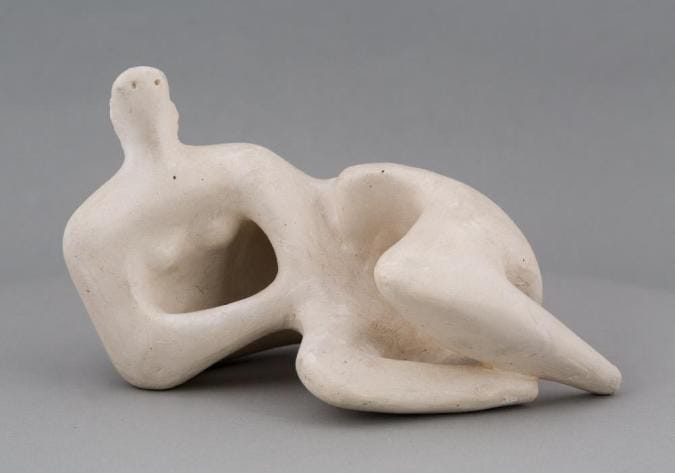
In a yoga class or wellness retreat you might have been told:
Your hips store emotion.
You’re carrying ancestral karma.
It’s your mother wound.
A doctor or physio might have blinded you with medical jargon.
Hypertonic iliopsoas
Leg length discrepancy
Sacroiliac dysfunction
But what if we saw pain and dysfunction as an opportunity — not as random problems but as the body’s way of communicatng with us, a signal asking to be heard body before it has to scream and break.
Anatomy and physiology
The psoas is structurally and neurologically designed as a conduit — between perception and action; insight and execution.
As the primary hip flexor, this deep, richly innervated muscle — attaching from the lower thoracic spine through the lumbar vertebrae — initiates movement. When awareness says do something, the psoas is the one that rises.
And when that conduit is blocked, the muscle doesn’t just tighten.
It holds.
It waits.
It hardens.
The left psoas carries that holding. This has a name:
Lack of permission — readiness gathered but denied, insight without reception, design with no support.
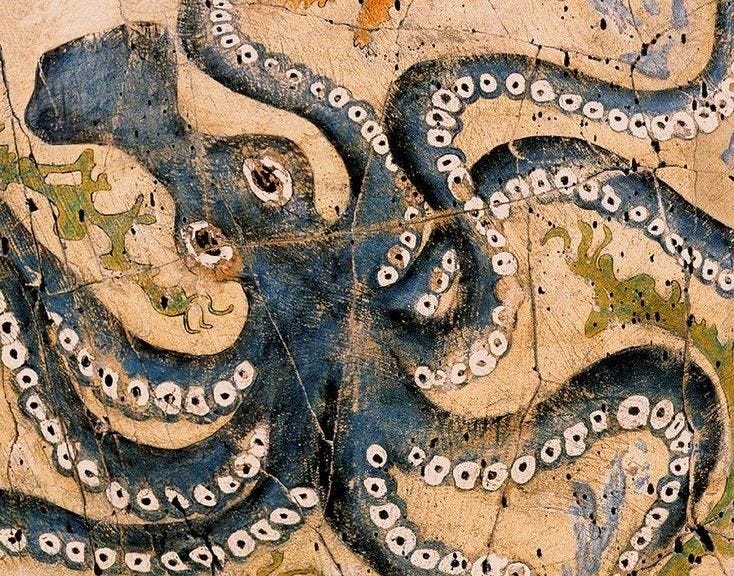
The Octopus Advocate
In Greek and Etruscan art the octopus symbolized the feminine: fluid, many-armed, sensing in all directions. That image endures. It names the one who feels first, who notices what others miss — the advocate.
Today that role can fall to anyone whose body can’t ignore what it perceives. But when their contribution is blocked, the psoas takes the load. The energy flows down the responsive psoas, ready to manifest change.
But patriarchy interrupts the passage. The blueprint exists, but action freezes.
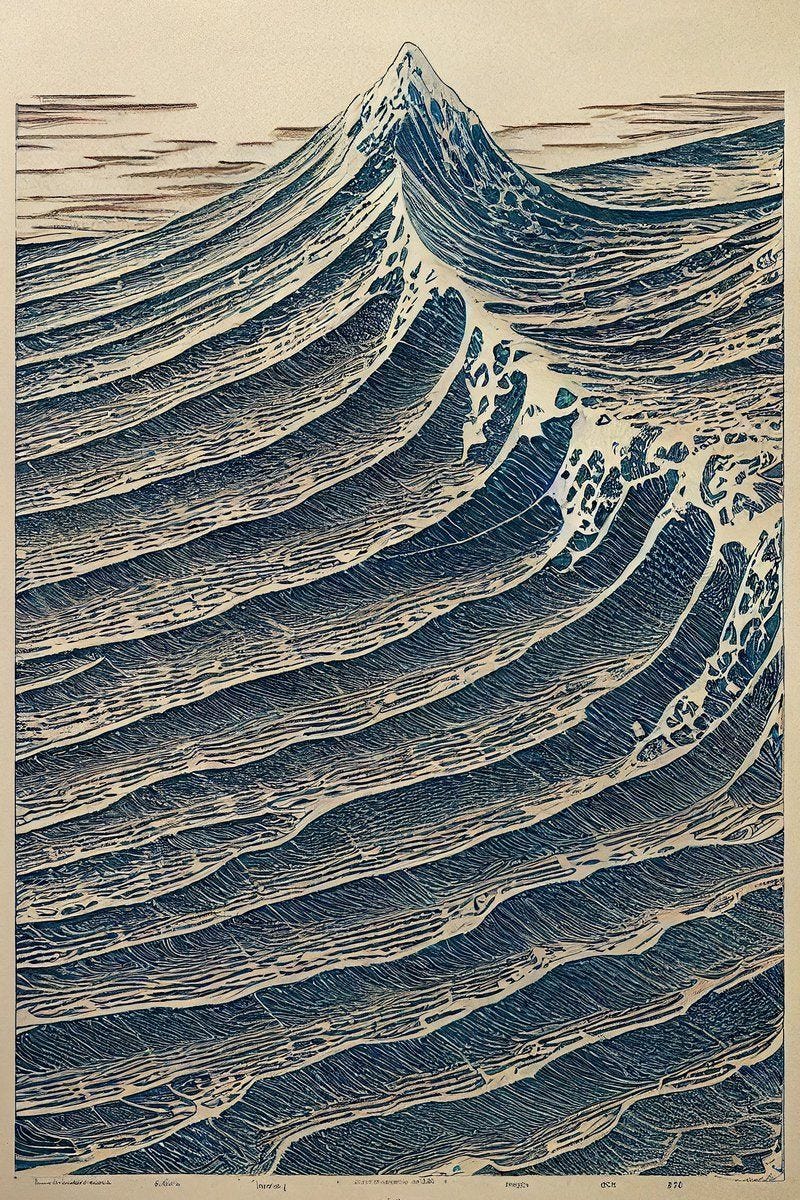
Neurological Dissonance
At the thoraco-lumbar junction — where spine, diaphragm, nerves and kidneys converge — the psoas hears the neural impulse and senses every shift in breath and chemistry. It is a prime mover.
The signal says go.
The system says no.
So it holds. It braces. It jams.
This is not mysticism. It is neurological dissonance: perception colliding with paralysis.
The Manifest Destiny of Care
Marxist theory says: whoever owns the means of production holds the power. The psoas knows this. It is the physical expression of blocked execution — the cost of being denied its natural duty.
Not the destiny of conquest, but of care.
The manifest destiny of the Octopus Advocate.
This blog is a three part exploration where I try to give voice to the psoas:
Henry Moore and the Severed Mother
About the Author:
Catherine Broué is a systems physiologist. After two decades in ICU and dialysis, she turned to the deeper question of real health, guided by mentors and the insights of Bohr and Buteyko. Her work centres on the body’s true regulators — breath and the central nervous system — and the return to parasympathetic dominance.
Just incredible writing & story telling :)
This part: “Lack of permission.
She has the insight — but no outlet.
The design — but no support.
The perception but not the power to act!” ==WOW, Wow and Wow again!