

Be Careful Using Breathing Apps
Your physiology Already Knows More than You Do

I understand why people use breathing apps.
The intention is usually to slow things down and help regulate the nervous system — and that intention matters.
But there’s a principle that often gets missed, and it’s important:
You don’t impose your will on the breath.
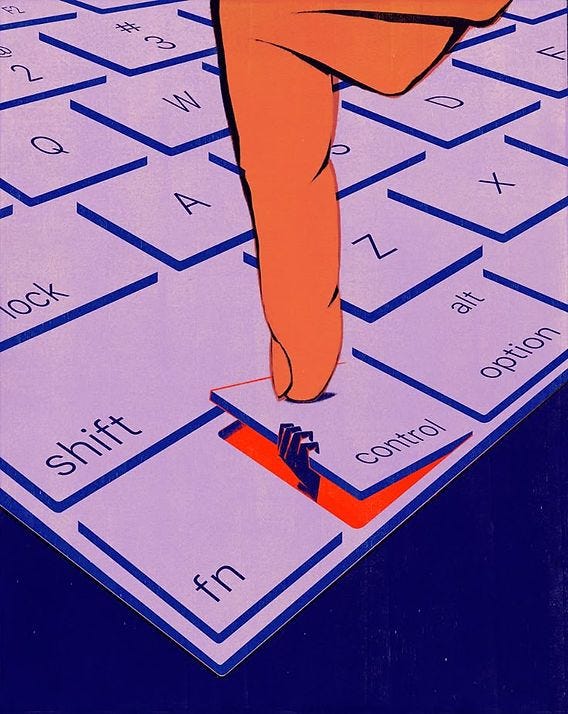
Breathing is not a simple behaviour you control with timing or rhythm.
It’s part of an automatic system that already has far more information about your physiology than your conscious mind does.
It’s continuously integrating CO₂, pH, blood flow, posture, temperature, digestion, and emotional load — all at once.
It is already better informed about what your body needs than your thinking brain realises.
Yes, most people are breathing too fast. Yes, the aim is to down-regulate autonomic breathing. But you cannot do that quickly, and you cannot do it by force.
It’s worth remembering that your baseline breathing pattern was established very early — in utero — in constant interaction with your mother’s physiology. It has been regulating oxygen delivery, blood flow, and nervous system tone for your entire life.
That doesn’t mean blame. It means respect. This is a system that has been with you from the beginning, is intrinsic to who you are, and already carries far more information than conscious instruction can provide. It’s not something to be bossed around. It’s something to be approached carefully.
Real change happens gradually and indirectly — by reducing effort, reducing volume, and increasing tolerance to CO₂. Pauses and variability re-emerge on their own when the system feels safe enough to allow them.

This is where breathing apps can become problematic.
They can be potentially dangerous in three specific ways:
They normalise chronic over-breathing.
Slow, paced breathing without volume control can still lower CO₂.They train people to override chemoreceptive feedback.
Breathing is regulated by CO₂ and pH, not by graphics, counting, or sound cues.They encourage forceful conscious control of an automatic system
that already knows more about your physiology than your conscious mind does.
This isn’t mysticism.
It’s physiology — and it’s why older breathing traditions warned against rushing or forcing breath control. Interfere too aggressively, and you destabilise the system you’re trying to regulate.
Breathing does not need to be paced.
If it does, something upstream is already struggling.
Apps can feel helpful, comforting, or organising — and people aren’t wrong for reaching for them. But they don’t retrain physiology, and they can teach the wrong lesson.
Breathing improves when it becomes quieter, smaller, more uneven — when it stops asking for attention.
The breath doesn’t respond to control.
It responds to restraint.